
SB 326 Balcony Inspectionsfor Southern California HOAs
Professional Inspections. Clear Findings. Informed HOA Decisions.
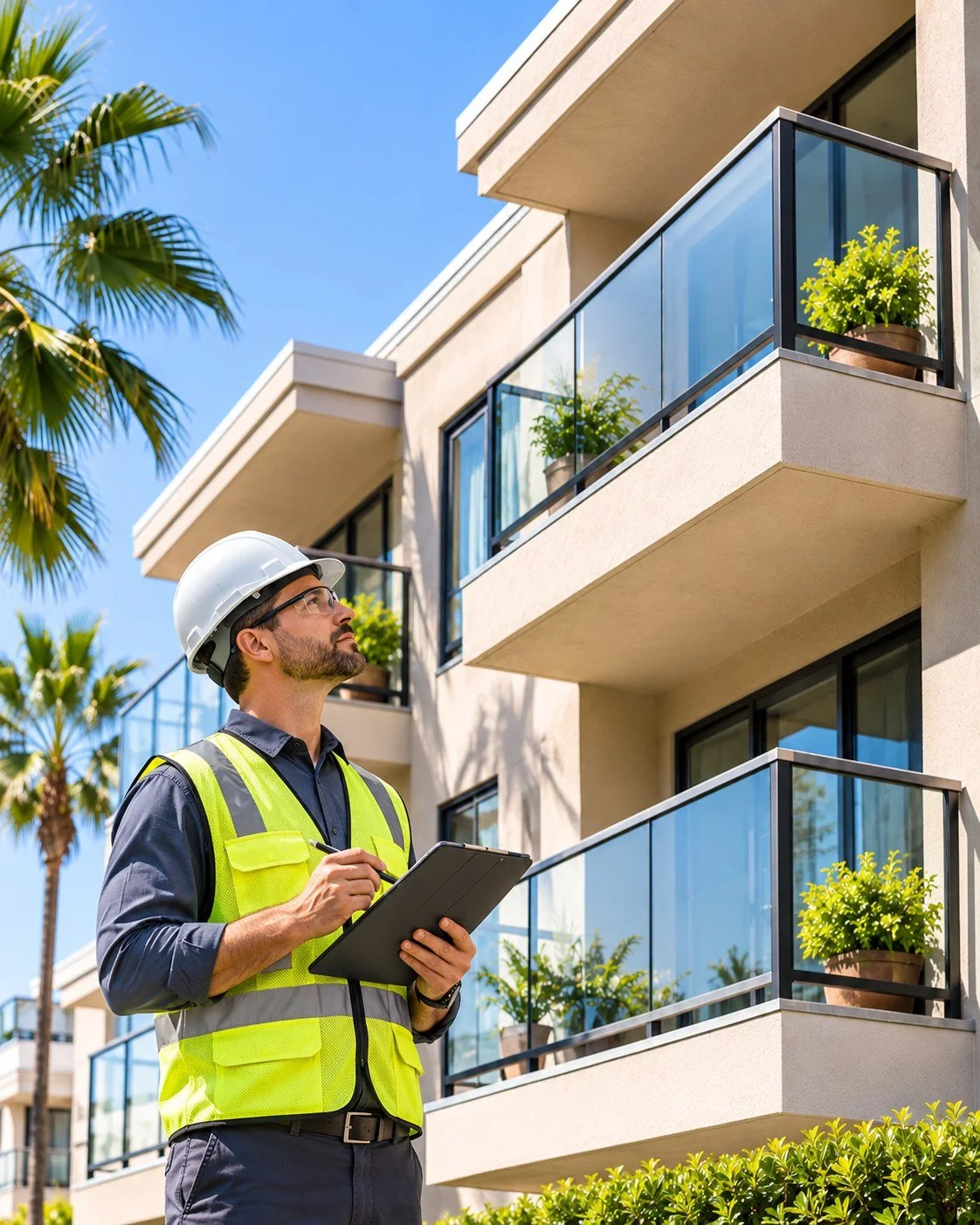
Great Escape Inspections provides professional SB 326 balcony inspection services for condominium associations, HOA boards, and property management companies throughout Southern California.
Our inspections assess qualifying balconies, decks, exterior stairways, and walkways, giving associations the findings they need to meet California inspection requirements and make informed property decisions.
- HOA & Condominium Balcony Inspections
- Structural & Waterproofing Evaluations
- Detailed Reports & Free In-Person Estimates
California SB 326 Inspection Requirements for HOAs & Condominiums
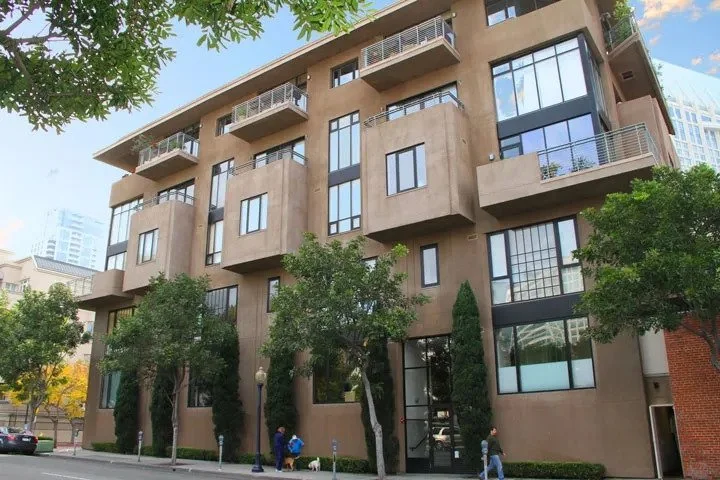
Under California Senate Bill 326, condominium associations must arrange periodic inspections of qualifying exterior elevated elements. The requirements are established under California Civil Code Section 5551 and apply to condominium projects containing three or more attached multifamily dwelling units.
The purpose of an SB 326 inspection is to determine whether applicable structural components and their waterproofing systems are in a generally safe condition and performing according to relevant standards.
The law applies to qualifying elements for which the homeowners association is responsible for maintenance or repair.
Which Condominium Properties Must Comply?
An exterior elevated element generally falls within the inspection requirements when it:
Extends beyond the exterior walls of the building.
Has a walking surface more than six feet above ground level.
Is designed for human occupancy or use.
Relies wholly or substantially on wood or wood-based materials for structural support.
An HOA's governing documents and the property's construction help establish which elements are covered.
Not every HOA property automatically requires an SB 326 inspection. Consider the applicable building type, structural characteristics, and association responsibilities.
How Does SB 326 Differ From SB 721?
SB 326 applies to qualifying condominium associations and requires inspections at least once every nine years using a statistically significant sample.
SB 721 inspections apply to qualifying apartment and multifamily rental properties under separate California requirements.
The two laws apply to different property types, so identifying the applicable requirements helps property owners and managers choose the right inspection service.
Which Exterior Elevated Elements Require Inspection?
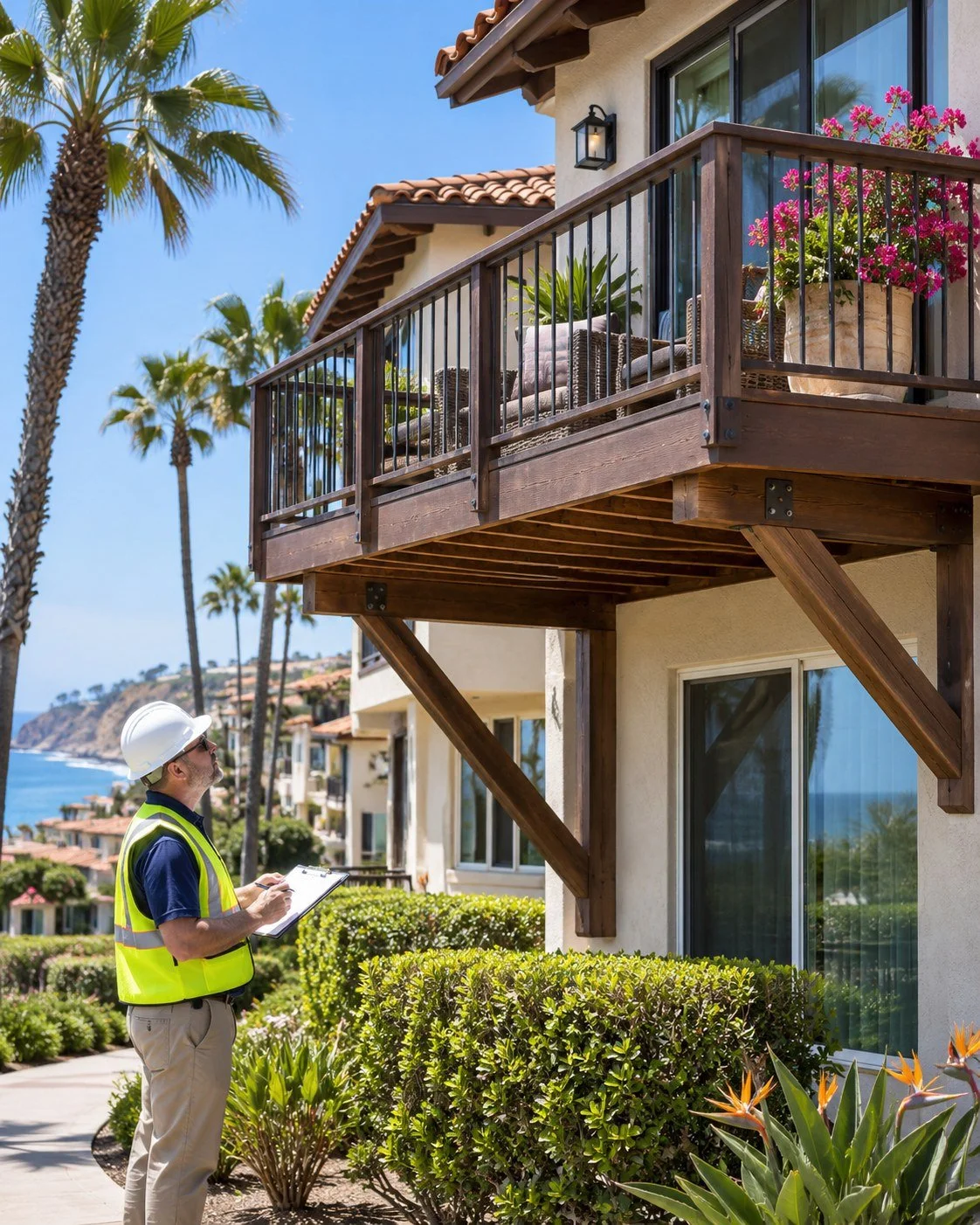
An HOA balcony inspection covers qualifying load-bearing components and their associated waterproofing systems.
These components are collectively known as exterior elevated elements (EEEs).
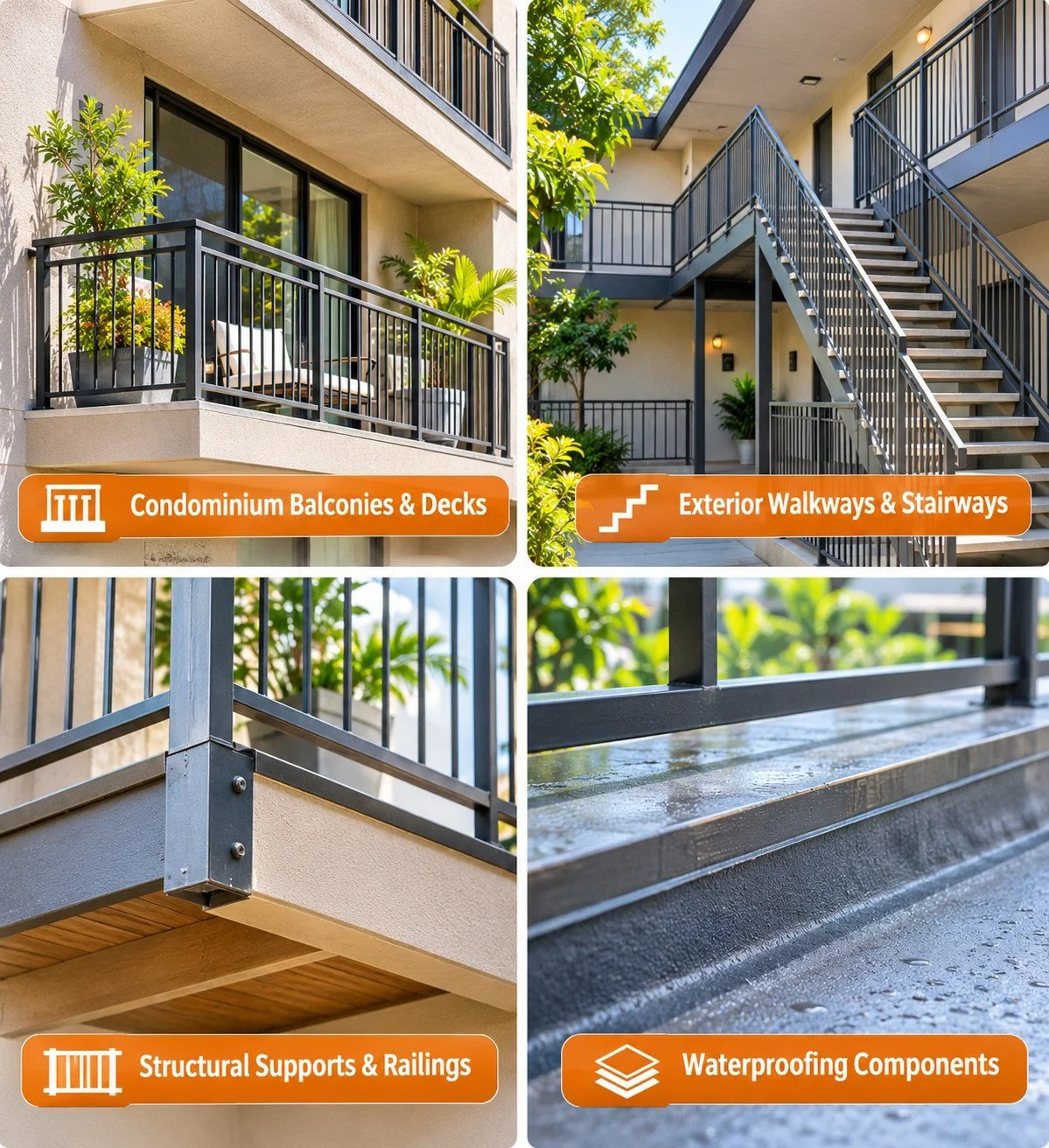
The inspection may involve several building features.
Condominium Balconies & Decks
We evaluate applicable balconies and elevated decks for structural deterioration, wood decay, moisture-related damage, and conditions that may affect performance.
Exterior Walkways & Stairways
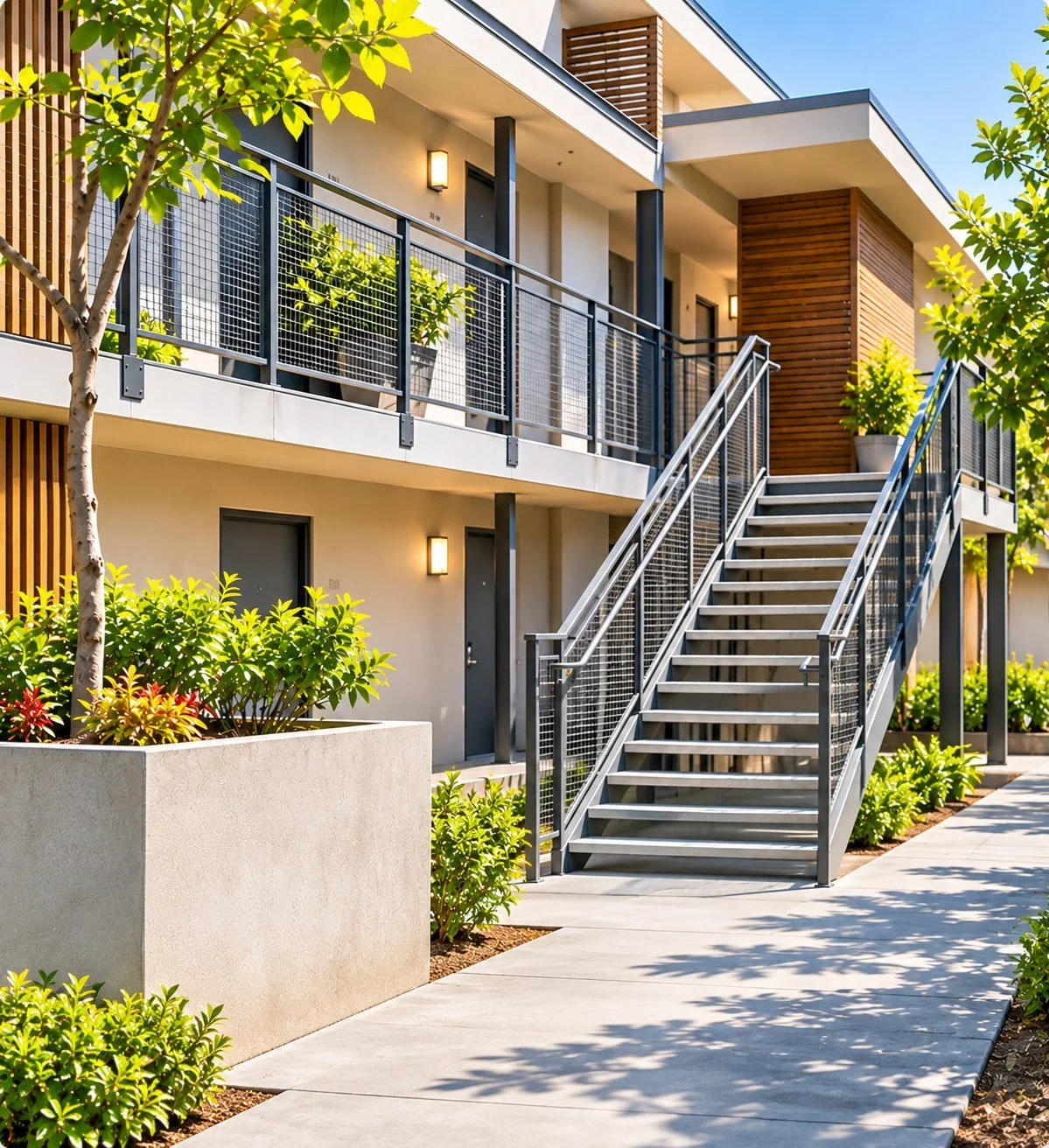
The evaluation assesses qualifying exterior walkways, stairways, and access structures where their height, construction, and structural support meet statutory criteria.
Structural Supports & Railings
The evaluation includes applicable load-bearing members and associated railings, with attention to conditions affecting structural stability and safe use.
Waterproofing Components
Flashings, membranes, coatings, and sealants help protect underlying structural components from water exposure. The inspector considers their condition when evaluating potential moisture-related deterioration.
The qualified inspector establishes the appropriate assessment scope based on the property's construction and the elements covered by the association's inspection obligations.
How Are SB 326 Inspections Conducted?
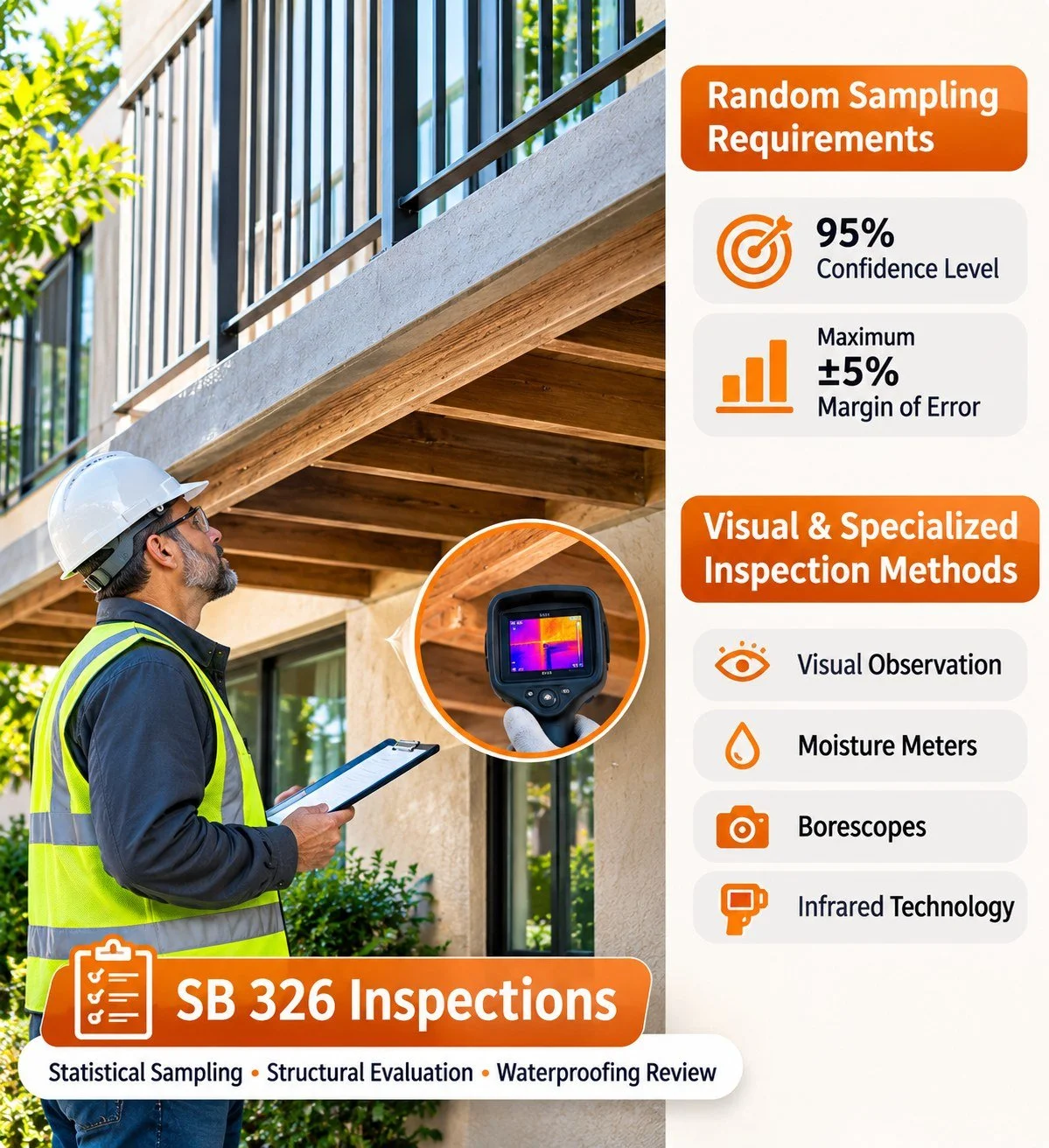
Under California Civil Code §5551, SB 326 inspections involve a random, statistically significant sample of qualifying exterior elevated elements to assess their structural condition and safety.
Random Sampling Requirements
The inspection sample must meet two standards:
Before the initial inspection, a licensed engineer prepares a randomized list covering each type of qualifying exterior elevated element and provides it to the HOA. Subsequent inspections continue through the established list.
Visual & Specialized Inspection Methods
The engineer evaluates structural and waterproofing components using the least intrusive methods necessary. Depending on the property's condition, these may include visual observation, moisture meters, borescopes, or infrared technology.
If signs of unintended water or water vapor intrusion indicate potential structural damage, further evaluation may be necessary.
Coordinating an SB 326 Inspection With Your HOA
Great Escape Inspections works with HOA boards and property managers to coordinate inspections, arrange property access, and provide clear documentation while minimizing disruption to residents.
Inspection Planning & Scheduling
We review the property's inspection needs, establish the assessment scope, and coordinate scheduling and access requirements with HOA management.
On-Site Inspection
A licensed engineer evaluates the selected exterior elevated elements in accordance with applicable SB 326 requirements and documents relevant findings.
Inspection Report & Next Steps
The association receives a professional inspection report outlining observed conditions and any recommended corrective actions or further evaluations.
What Should an SB 326 Inspection Report Include?
An SB 326 inspection report provides the condominium association with a professional assessment of the elements examined and the findings relevant to their condition.
Under Civil Code §5551, the written report must document:
Structural Components
Identification of the evaluated load-bearing elements and associated waterproofing systems.
Current Condition
Findings concerning deterioration, damage, or other observed concerns.
Remaining Useful Life
Assessment of expected future performance and remaining service life.
Recommended Action
Repairs, replacements, or additional measures identified as necessary.
The report is signed or stamped by the responsible licensed engineer and presented to the HOA board.
Under the updated 2026 requirements, the report must also include a first-page summary covering inspection details, condominium units, evaluated exterior elevated elements, immediate safety concerns, and engineer certification.
If an immediate safety hazard is identified, the licensed engineer must provide the completed inspection report to the HOA immediately and to the local code enforcement agency within 15 days. The association must take immediate protective measures, including restricting access to affected elements until the required repairs are inspected and approved.

SB 326 Inspection Deadlines & Long-Term HOA Planning
The initial SB 326 inspection deadline for qualifying existing condominium projects was January 1, 2025.
Associations that have not completed a required inspection should promptly arrange an evaluation and review any additional requirements set by the applicable local enforcement agency.
Nine-Year Inspection Cycle
California law generally requires qualifying condominium associations to complete inspections at least once every nine years.
For applicable buildings whose permit applications were submitted on or after January 1, 2020, the initial inspection must generally be completed within six years following issuance of the certificate of occupancy.
Reserve Study Coordination
SB 326 inspections are coordinated with the association's reserve study responsibilities under California Civil Code Section 5550.
The signed or stamped inspection report must be incorporated into the required reserve study.
Information concerning current structural conditions, remaining useful life, and recommended corrective work can support discussions about future maintenance requirements and reserve planning.
Review the statutory requirements governing SB 326 exterior elevated element inspections.
View Section 5551 →HOA Inspection Records & Condominium Disclosures
Associations must retain inspection reports for two inspection cycles.
Under amendments effective January 1, 2026, SB 326 reports are expressly included among association records available for member inspection under the applicable statutory provisions.
California Civil Code Section 4525 also requires condominium sellers to provide the most recent SB 326 inspection report among the specified documents disclosed to prospective purchasers.
Accurate inspection records support association administration, member information requests, and condominium ownership transactions.
Who Can Perform an SB 326 Inspection in Southern California?
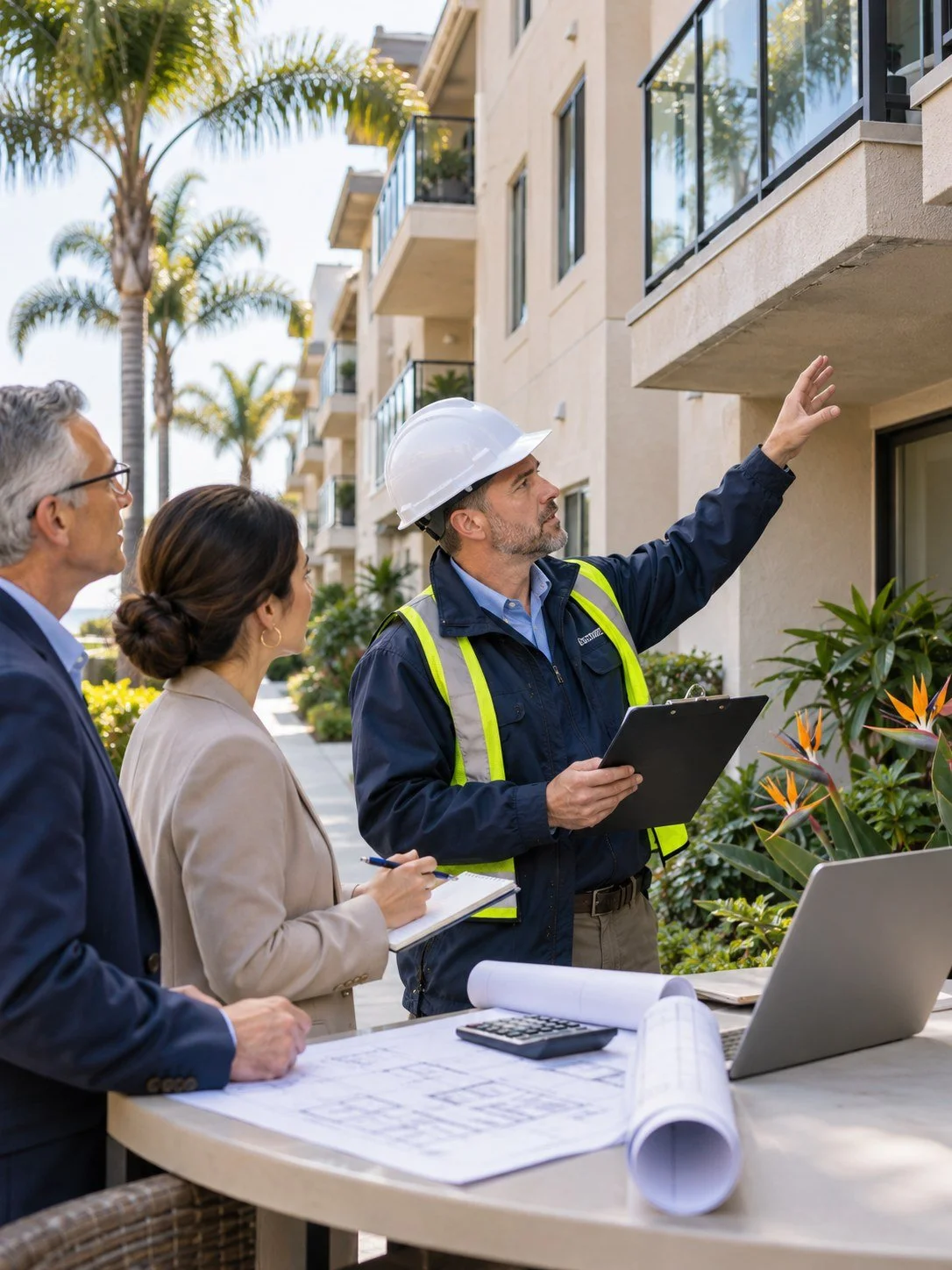
An SB 326 inspection must be conducted by a qualified California-licensed professional authorized under Civil Code §5551.
Eligible professionals include:
The responsible professional must follow the applicable inspection, sampling, and reporting requirements.
When selecting an SB 326 inspection company, HOA boards should confirm the inspector's qualifications and the documentation they will provide.
How Much Does an SB 326 Inspection Cost?
The SB 326 inspection cost depends on the condominium property's characteristics and the extent of the required assessment.
Pricing depends on factors such as the number of buildings, the number and configuration of qualifying balconies and decks, structural accessibility, inspection methods, and reporting requirements.
Great Escape Inspections provides free in-person estimates to assess your property and determine the appropriate inspection scope and pricing.
Whether your HOA needs an SB 326 inspection quote or an E3 inspection estimate, our team can outline the proposed evaluation and pricing before scheduling.
Get a Free Inspection Estimate →Why HOA Boards Choose Great Escape Inspections
Great Escape Inspections provides professional balcony inspection services tailored to condominium associations and HOA communities throughout Southern California.
Property-Specific Inspection Estimates
Our free in-person estimates consider the property's layout, qualifying exterior elevated elements, and inspection requirements to establish an appropriate scope and pricing.
Professional Inspection Documentation
We provide detailed findings, including relevant photographic evidence and recommended actions, to support HOA board reviews and property maintenance planning.
Clear Communication & Support
Our team works with association representatives and property managers to coordinate inspections, answer questions, and guide next steps.

Looking for Professional SB 326 Inspection Services Near You?
Great Escape Inspections provides professional SB 326 inspection services for condominium associations, HOA boards, and property management companies throughout Southern California.
Our services are available across the following Southern California counties:
Whether you manage a small condominium property or a large residential community, our team can arrange a professional inspection and provide a property-specific estimate.
Request an Inspection →Schedule Your SB 326 Inspection With Great Escape Inspections
Great Escape Inspections helps condominium associations throughout Southern California address their balcony inspection needs with professional evaluations, detailed documentation, and property-specific inspection support.
Give your HOA board reliable findings to assess structural conditions, review recommendations, and plan appropriate next steps for your community.
Schedule Your Inspection →Frequently Asked Questions
1. Does SB 326 apply to townhouse communities?
It depends. Townhouse communities may fall under SB 326 if they are part of a qualifying condominium project and the association is responsible for maintaining or repairing covered exterior elevated elements.
2. Are exclusive-use balconies included in SB 326 inspections?
Yes. Balconies reserved for individual condominium owners may still require inspection if they meet the statutory criteria and the HOA is responsible for maintenance or repair.
3. Who pays for an SB 326 inspection?
The HOA generally funds the inspection through its operating budget, reserves, or other approved funding arrangements, subject to the association's governing documents and applicable financial requirements.
4. Can an HOA use a previous engineering report for SB 326 compliance?
Possibly. An existing report may be acceptable if it meets the applicable statutory requirements and inspection schedule. A qualified professional should verify its scope, findings, and documentation before the HOA relies on it.
5. Do condominium owners need to be present during an inspection?
Not always. Owners generally do not need to be present unless they must assist with access to balconies or other areas scheduled for inspection.
6. Can an HOA hire a different inspector for its next inspection?
Yes. Condominium associations may appoint another appropriately licensed professional for subsequent inspections. Previous reports and the established randomized inspection list should remain available for reference.
7. Does changing HOA management reset the inspection schedule?
No. Changing property management companies does not restart the statutory inspection cycle. The association remains responsible for maintaining inspection records and meeting its existing obligations.
8. Can an HOA insurance inspection replace an SB 326 inspection?
No. A routine insurance inspection does not automatically satisfy SB 326. An inspection must meet the applicable professional qualifications, sampling, and reporting requirements to be compliant.
9. Can local requirements be stricter than SB 326?
Yes. California law allows local governments and HOA boards to establish additional requirements beyond the statewide standards. Associations should check whether any stricter rules apply to their properties.
10. Can an HOA request inspections of more balconies than the required sample?
Yes. An association may arrange a broader evaluation if it wants additional coverage. The inspection must still meet SB 326's statutory requirements, and the inspector should agree to any expanded scope.